
How often should you groom your dog? A schedule by breed
20 June 2026 · updated 22 August 2026 · 7 min read
By the Kudłate Cuda team · reviewed by Anna, groomer
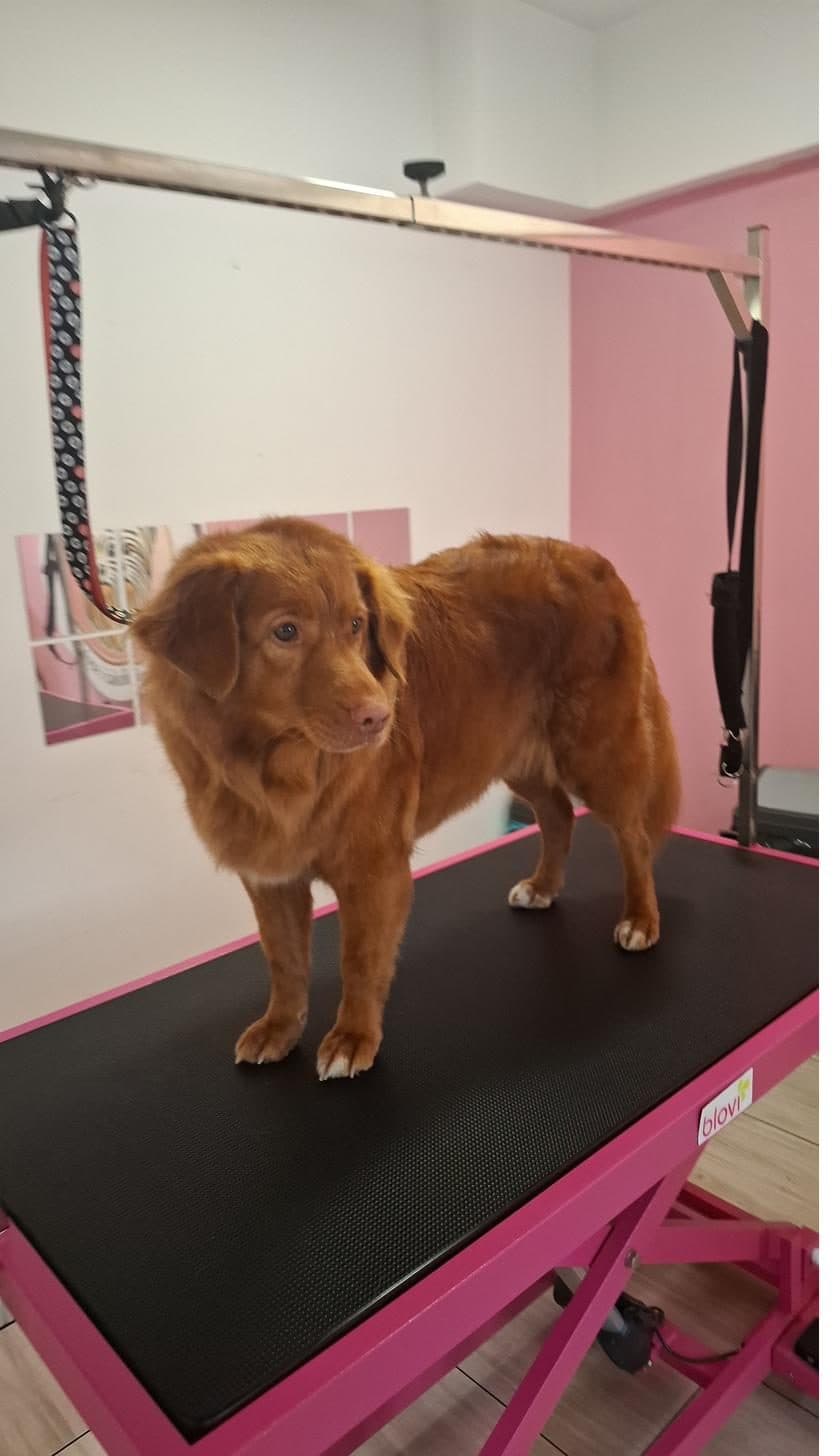
How often should you groom your dog? Every four weeks, once a quarter, or only before summer? It's one of the most common questions owners ask — and one the internet answers most chaotically. This article brings order to the topic: we explain why the coat decides frequency, not the breed, give a concrete schedule for every coat type, and say plainly when clipping actually harms a dog.
The shortest answer: dogs with a continuously growing coat (Yorkie, Maltese, Poodle, Shih Tzu) should visit the groomer every 4–8 weeks. Double-coated dogs (Spitz, Samoyed, Husky, German Shepherd) every 8–12 weeks — but for undercoat removal, not a haircut. Wiry coats (Schnauzer, terriers) — hand-stripping every 8–12 weeks. Short coats (Labrador, Beagle) — a bath and brush-out every 8–12 weeks.
Coat first, breed second — the four coat types
Breed is a mental shortcut. What really decides how often a dog needs a groomer is coat type — and with mixed breeds that can be surprising. There are four basic types:
- Growing coat — the hair grows continuously, like ours, and barely sheds. Without trimming it felts and forms mats.
- Double coat — a thick, water-resistant outer coat plus a soft, dense undercoat that sheds seasonally.
- Wiry coat — hard, stiff hair that dies but should be removed by hand (stripped) so it regrows with its proper texture and colour.
- Short, smooth coat — short hair lying close to the body, shedding all year round.
If you're not sure which type your dog has, come and see us — we'll assess the coat on the spot and suggest a plan with no obligation.
Growing coat: Yorkie, Maltese, Poodle, Shih Tzu — every 4–8 weeks
This coat type needs the most frequent visits. The hair has no "natural length" and keeps growing until you trim it. What's more, a growing coat felts very easily — especially in the armpits, behind the ears, in the groin and on the legs, where friction is greatest.
The recommended rhythm is a haircut every 4–8 weeks. Four weeks for short practical cuts and active dogs, up to eight for longer styles and diligent home brushing. Skipping one visit usually isn't a problem. Skipping three means mats, a de-matting surcharge and often clipping shorter than you planned.
This group also includes: Bichon Frise, Cavapoo, Maltipoo, Lhasa Apso, Old English Sheepdog, and most "doodles" (Labradoodle, Goldendoodle) — their coat usually inherits the Poodle's properties.
Double coat: Spitz, Samoyed, Husky, Shepherd — de-shedding, not shaving
This is the most important section of the article, because this is where the most damage is done. A double-coated dog should not be clipped short — unless a vet recommends it for medical reasons.
Why? A double coat is a thermoregulation system. The undercoat insulates against cold in winter, and in summer — once brushed out — lets air circulate at the skin and protects against overheating and sunburn. Shaving destroys this system: the coat regrows unevenly, the undercoat often grows faster than the guard hairs, and the texture may never return to normal. Counter-intuitively, shaving doesn't cool the dog — it strips away protection.
Instead: professional undercoat removal (de-shedding) every 8–12 weeks, and during shedding seasons — spring and autumn — even every 6 weeks. A bath, thorough drying and brushing remove kilograms of dead hair that would otherwise end up on your sofa. We only clip for hygiene: paws, around the eyes and ears, and under the tail.
This group includes: Spitz, Pomeranian, Samoyed, Husky, Malamute, German Shepherd, Border Collie, Golden Retriever, Bernese Mountain Dog, Akita, Leonberger, Newfoundland.
Wiry coat: Schnauzer, terriers — hand-stripping every 8–12 weeks
A wiry coat has a unique feature: the hair dies but doesn't fall out on its own — it stays in the follicle. Hand-stripping means removing the dead hair by hand (with a stripping knife or fingers), so that new hair regrows hard, in full colour and with the correct texture.
Clipping is faster and cheaper, but with every visit the coat becomes softer, lighter and less resistant to dirt and water. For show dogs, stripping is mandatory. For pets it's a matter of choice — but it's worth knowing the consequences before reaching for the clippers for the first time.
Recommended rhythm: hand-stripping every 8–12 weeks. This group includes: Schnauzer (all sizes), West Highland White Terrier, Cairn Terrier, rough-coated Jack Russell, Airedale Terrier, wire-haired Dachshund.
Short coat: Labrador, Beagle, Boxer — bath and brush-out every 8–12 weeks
The least demanding type — but not maintenance-free. Short-haired dogs shed all year, and many of them (Labrador, Beagle) have a dense undercoat beneath the short hair. A regular bath with a rubber brush or de-shedding tool significantly reduces the amount of hair at home and improves skin condition.
Recommended rhythm: every 8–12 weeks, plus nails — for dogs walking mostly on soft ground, even every 4–6 weeks.
The grooming calendar at a glance
- Growing coat (Yorkie, Maltese, Poodle, Shih Tzu, Bichon, doodles): haircut every 4–8 weeks, home brushing 2–3 times a week
- Double coat (Spitz, Samoyed, Husky, Shepherd, Golden): undercoat removal every 8–12 weeks (every 6 during shedding), never shaving, home brushing once a week
- Wiry coat (Schnauzer, terriers): hand-stripping every 8–12 weeks, home brushing once a week
- Short coat (Labrador, Beagle, Boxer): bath and brush-out every 8–12 weeks, rubber brush once a week
- All dogs: nails every 4–8 weeks, ear check at every brushing
Seasons: spring and autumn are undercoat time
Double-coated dogs shed twice a year: around March–April they drop the winter undercoat, and in September–October the summer one. In those months it's worth booking a de-shedding visit — the dog gets rid of dead hair in one afternoon instead of over six weeks on your carpet.
In summer, remember: a dog with a growing coat can have a shorter practical cut, but a double-coated dog needs brushing out, not shaving. In winter we leave growing coats a little longer, but still regularly trimmed — long, neglected hair collects snow and moisture.
Puppies and seniors — a different rhythm
Puppies should come for an adaptation visit as early as possible after completing their vaccination course — usually at 3–4 months. It's not about a haircut, but about getting used to the salon, water, the sound of the dryer and being handled. A dog that learns grooming as a puppy will tolerate it calmly for life. The first full groom is usually around 5–6 months.
Seniors often need shorter but more frequent visits. An older dog copes less well with standing on the table for long, while a senior's coat tends to mat more easily because the dog moves less and doesn't groom itself. We adapt the pace and scope to the dog's condition — sometimes it's better to split grooming into two shorter visits.
What to do at home between visits
A groomer every six weeks doesn't replace brushing at home. The simplest kit:
- A metal comb with medium-spaced teeth — essential for growing coats. Comb down to the skin, not over the surface; mats form at the skin.
- A slicker brush — for brushing out and separating the hair.
- An undercoat tool — for double coats, once a week, gently.
- A rubber glove or brush — for short coats.
Five minutes two or three times a week is less than one episode of a series — and saves an hour of de-matting on the table and a surcharge of several dozen złoty.
Signs it's time for a visit
You don't have to count weeks. Your dog will tell you:
- the comb doesn't pass smoothly to the skin around the ears, armpits or groin,
- hair covers the eyes or the dog squints more than usual,
- nails click on the floor when walking,
- the dog smells despite no visible dirt (a common sign of skin problems under packed coat),
- the hair on the paws collects mud and forms "slippers",
- on a double-coated dog: tufts of dead hair sticking out of the coat.
Not sure which rhythm is best for your dog? At Kudłate Cuda (Radymno, serving Jarosław and Przemyśl counties and the whole Podkarpacie region) we'll suggest a grooming plan with no obligation — call 696 413 022 or send us a message.
Questions about caring for your dog?
Book a visit