
A dog's first grooming visit — how to prepare
12 May 2026 · updated 22 August 2026 · 8 min read
By the Kudłate Cuda team · reviewed by Anna, groomer
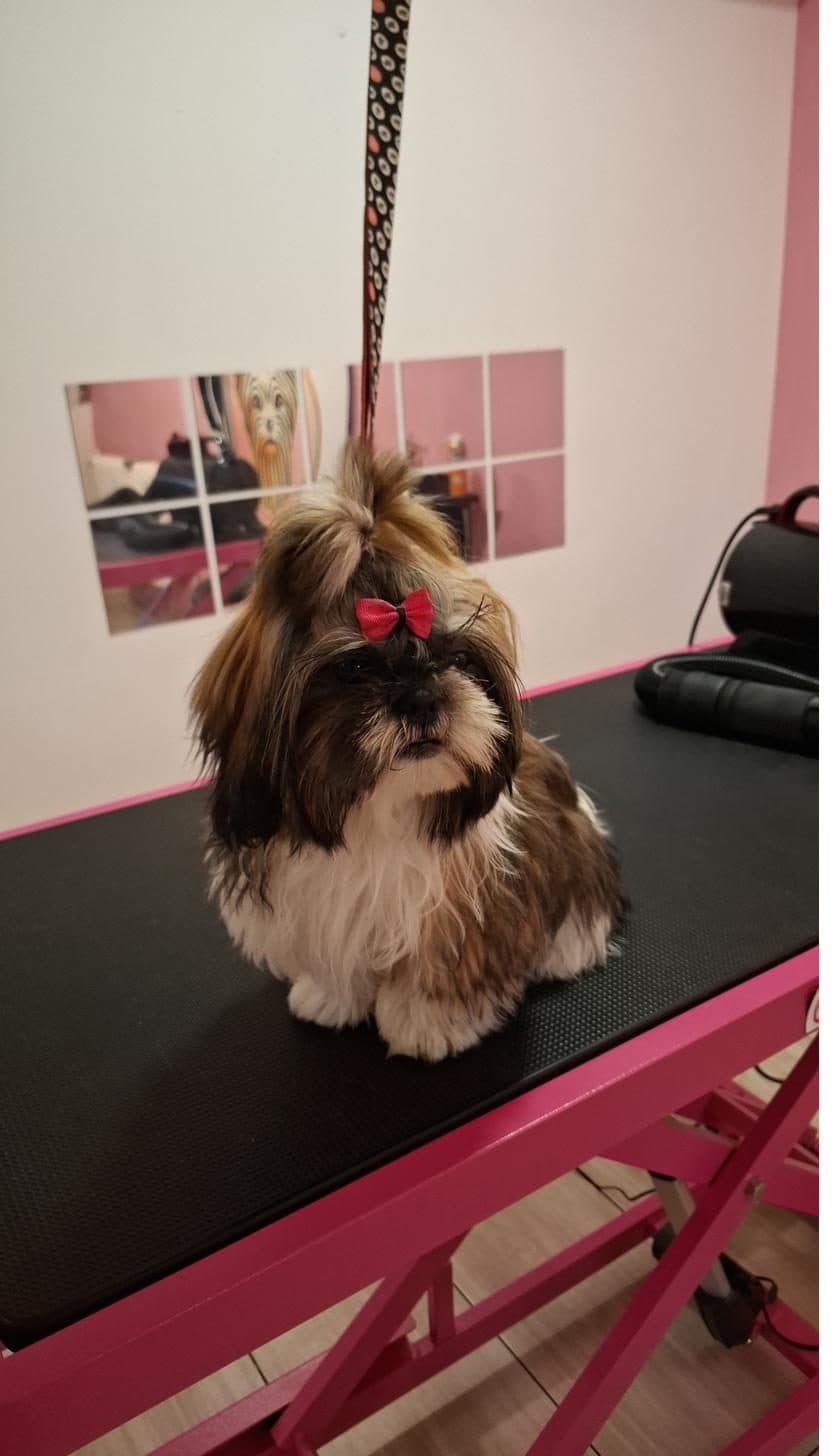
A first visit to the groomer is a completely new experience for a dog: unfamiliar smells, the hum of a dryer, the buzz of clippers, strange hands on its paws and muzzle. For the owner it can be just as stressful — "will my dog cope?", "will it cry?", "should I stay?". The good news: most of that stress can be removed with a few simple steps in the week before the visit. This article shows you step by step how to prepare your dog, what to bring, what the visit looks like from the inside, and why 50 PLN for an adaptation visit is the best money you'll ever spend on your dog's grooming.
When to start — puppy and adult dog
Puppy: the best moment is 3–4 months of age, right after the vaccination course is complete. It's not about a haircut yet — it's about the dog getting to know the salon, the table, water and the sounds before it has to do anything with them. A puppy that first meets a groomer at a year old with mats learns that the salon is a place of pain. A puppy that came for 20 minutes of play and a few strokes of a comb learns that the salon is a place of treats.
An adult dog that has never been to a groomer: will also manage, but it's worth giving it more time. An adaptation visit is just as valuable for an adult as for a puppy — maybe even more so.
A dog with bad past experiences (another salon, painful de-matting, being forcibly restrained): call us before booking and tell us what happened. We'll adjust the pace and start from scratch.
The week before: getting used to being handled
A groomer touches a dog in places most owners don't touch every day. Seven days is enough to change that:
- Paws. Every day, for a minute, take each paw in your hand, spread the toes, touch the pads and nails. Reward with a treat. This prepares for nail trimming and paw clipping.
- Ears. Lift the ear flap, look inside, gently massage the base. Reward.
- Muzzle and eye area. Lift the lips, touch around the eyes, gently hold the chin. Reward.
- Belly and groin. Roll the dog onto its side, touch the belly and the inside of the thighs.
- Comb. If the dog doesn't know a comb, start with a few strokes along the back, always with a reward. Don't force mats out — leave that to us.
- Dryer. Turn on your own hair dryer in another room, then in the same room, then direct warm (not hot) air at the dog's back from a distance. A few seconds, a reward, done.
The goal isn't for the dog to like these things. The goal is for them not to be new.
The day of the visit: walk, meal, calm
- Walk. Take the dog out for 20–30 minutes before leaving. A physically tired dog is calmer, and an empty bladder saves everyone's nerves.
- Meal. Light, 2–3 hours before the visit. Don't feed right before — a full stomach can be uncomfortable while standing on the table and during the bath. Don't arrive with a dog that's been hungry since morning either — a hungry dog is irritable.
- You. Dogs read our emotions. If you walk into the salon tense, with a tight throat, the dog reads it as a danger signal. Arrive calmly, hand the dog over matter-of-factly, say goodbye briefly — no long hugs and "my poor baby".
- Punctuality. Arrive on time. Being more than 15 minutes late may mean rescheduling so we don't cut other dogs' time short.
What to bring and what to tell the groomer
Bring:
- the vaccination record or a certificate of current rabies vaccination (for the safety of all animals in the salon),
- your own product, if the dog needs a specific one, e.g. dermatological — we'll gladly use it,
- a lead and collar or harness the dog feels secure in,
- a photo of the haircut, if you have specific expectations — a picture says more than "short, but not too short".
Tell us:
- about illnesses, allergies, skin problems, joint pain (senior, dysplasia),
- about places the dog doesn't like being touched,
- whether the dog can be aggressive or very anxious — that's nothing to be ashamed of, it's information that lets us prepare,
- about previous grooming experiences, especially bad ones,
- about fleas or ticks, if you've noticed them.
The adaptation visit — 50 PLN that changes everything
An adaptation visit is a short, calm meeting without a full groom. The dog enters the salon, explores the smells, stands on the table, gets a treat. We touch the paws, ears, muzzle. We switch the dryer on for a moment at a distance. Maybe a few strokes of the comb, maybe a couple of nails trimmed — if the dog is ready. If not, we finish early, always on a positive note.
Cost: 50 PLN. Time: usually 20–30 minutes.
Why does it make financial sense? A dog that has been through adaptation cooperates at its first full visit. A cooperative dog means a shorter appointment, fewer breaks, a better result and a price closer to the bottom of the range. And above all: a dog that isn't afraid of the groomer will come to us calmly for its whole life — not fighting over every nail.
We especially recommend it for puppies, anxious dogs, rescue dogs and dogs with bad past experiences.
What the visit looks like step by step
So there are no surprises, here's what happens behind the salon door:
- Welcome and conversation. We look at the dog, assess the coat, agree the scope and the price. Only then do we start.
- Dry brush-out. Before the dog goes into the tub, we brush out the coat — wet mats tighten even further.
- Bath. Warm water, a product chosen for the coat, a calm pace. Most dogs relax after the first minute.
- Drying. The longest stage. We dry with warm air, gradually, with breaks if the dog needs them.
- Clipping or de-shedding. Clippers and scissors — or undercoat tools, depending on coat type.
- Nails, ears, eye area. Small procedures that make a big difference to the dog's comfort.
- Pick-up. We show you the result, tell you how the dog behaved, and suggest when to come next. If something about the cut isn't right — say so straight away, adjustments on the spot are no problem.
We work on one dog at a time. We don't use sedatives — ever. If a dog gets very stressed, we take a break or, in extreme cases, stop the procedure for its own good.
Can I stay during the groom?
We usually work without the owner present — and not because we have anything to hide. Most dogs behave with their owner like a child with a parent: they look for rescue, pull towards them, whine because they know someone will react. Without the owner, the same dog calms down within a few minutes and starts cooperating with the groomer. We see it every day.
If you have doubts — let's talk. In justified cases (especially for an adaptation visit) we can arrange things differently.
Anxious dog, senior, rescue dog
Anxious dog: we start with an adaptation visit, then split the groom into shorter stages if needed. We don't restrain by force. We don't punish. We wait.
Senior: we adapt the pace and scope to the dog's condition. Less time standing on the table, breaks, support for painful joints. Sometimes it's better to spread grooming over two visits than to exhaust the dog with one long one.
Rescue dog or one with an unknown history: we treat it like a dog with bad past experiences — slowly, attentive to signals. Tell us everything you know.
A dog that can be aggressive: let us know in advance. We'll prepare. In exceptional situations we may refuse the procedure for the dog's safety and ours — and difficult dogs are quoted individually.
After the visit: what next
A dog is often tired after its first visit — that's normal, a lot happened. Give it a quiet afternoon. For the first few days, brush briefly and with a reward, to reinforce that the touch of a comb is nothing bad. Plan the next visit before the coat has a chance to mat: for growing coats in 4–8 weeks, for others in 8–12. A dog that comes back regularly walks into the salon more confidently every time.
Checklist before the first visit
- A week before: daily handling of paws, ears, muzzle — with a reward
- A few days before: getting used to the comb and the sound of the dryer
- The day of the visit: a 20–30 minute walk, a light meal 2–3 hours earlier
- Bring: vaccination record, your own product (if needed), a photo of the desired cut
- Tell us: about health, fears, bad experiences, parasites
- Stay calm at goodbye — brief and matter-of-fact
- Arrive on time and collect the dog at the agreed hour
Want to book an adaptation visit or have questions about your dog's first visit? Call 696 413 022, message us on WhatsApp or fill in the form on our website. Kudłate Cuda, Złota Góra 11/A, Radymno — serving Jarosław and Przemyśl counties and the whole Podkarpacie region.
Questions about caring for your dog?
Book a visit